

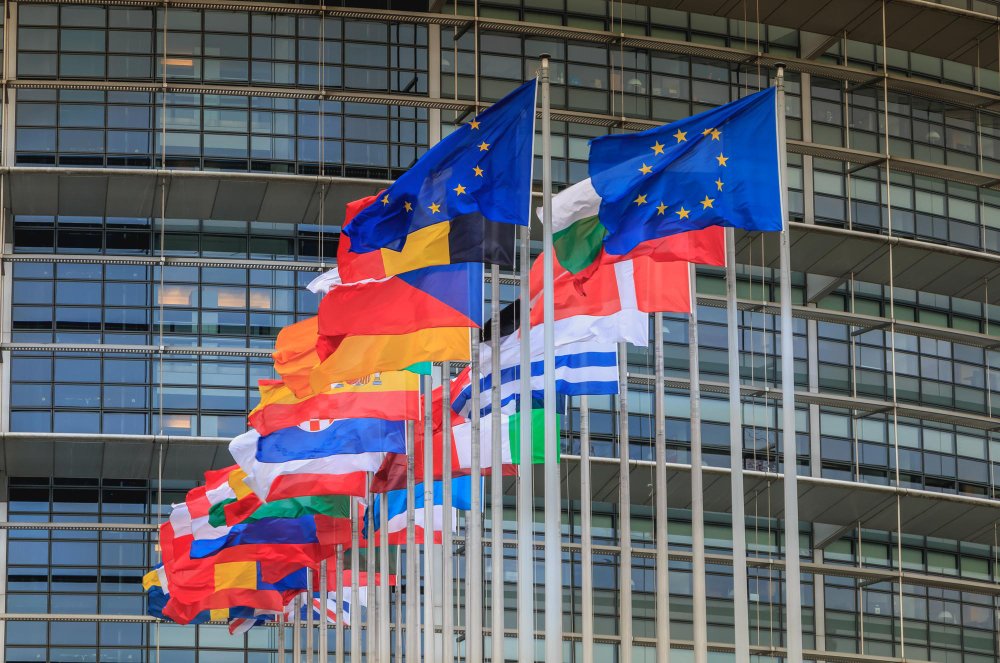
Europe – A Continent at the Crossroads
Quo vadis, Europe?
The European Commission is anything but government of the people, by the people, for the people. Behind Trump stand 75 million voters. How many chose Ursula von der Leyen as the president of the Brussels executive?
Three years have passed since the war in Ukraine—an eternity in today’s politics. In just 36 months, power relations have shifted tremendously. The international system is being shaken to its core. Putin has not died of cancer, nor has he been toppled by Western sanctions.
The world is in a state of continuous change. China and Russia are shaking hands; BRICS is flexing its muscles with India and Brazil alongside them. The United Nations has become irrelevant. We are living in the logic of the 19th century, where only great powers matter. We see only raw negotiations between the planet’s colossi. And the world’s hegemons have no friends, only interests.
Fed up with the impotent rhetoric of the Brussels elite, President Trump is negotiating the future of Ukraine. We will likely see a partition—the Lviv-Kyiv area might remain a Western region (but also an American economic colony), while Donbas will be under Moscow’s boot. Spheres of influence have not disappeared.
The British Empire collapsed not because of Hitler’s Germans, nor because of Stalin’s Russia. The primary cause? The maritime power of the United States led by President Eisenhower. The episode known as Suez marked a triumph for post-war America. Today, Great Britain remains an island full of memories.
The new world is shaped by the logic of economic supremacy: rare metals, cheap energy, accessible trade routes. This is not about cynicism, but about realism. Who can formulate Romania’s national interest? We don’t know. We lack a legitimate president, and the ministers of the Ciolacu government are merely failed pantomime actors.
Trump has not forgotten the lesson of failed wars in Iraq, Afghanistan, Syria, or Libya—all fought under the banner of democracy. The removal of Saddam Hussein or Gaddafi was followed only by chaos. Anarchy, as Aristotle said, is worse than tyranny.
The future of Ukraine is uncertain. The past? A history marked by the ambitions of Tsars, the Machiavellianism of Stalin, and then Khrushchev’s insolence regarding Crimea. Zelensky’s nationalism is visceral and irrational (while the patriotism of a Georgescu is labeled “fascist” and “anti-European”).